
Solarban® 72 Acuity® Glass by Vitro Architectural Glass Combines with Brick to Help Blend New Office Structure with Historic Seattle Neighborhood
PITTSBURGH, April 2, 2026 – Honoring the fabric of Seattle’s oldest historical neighborhood Pioneer Square, The Jack wraps seven stories of creative office space and ground-level retail with a carefully curated blend of red brick, curtainwall and steel window units.
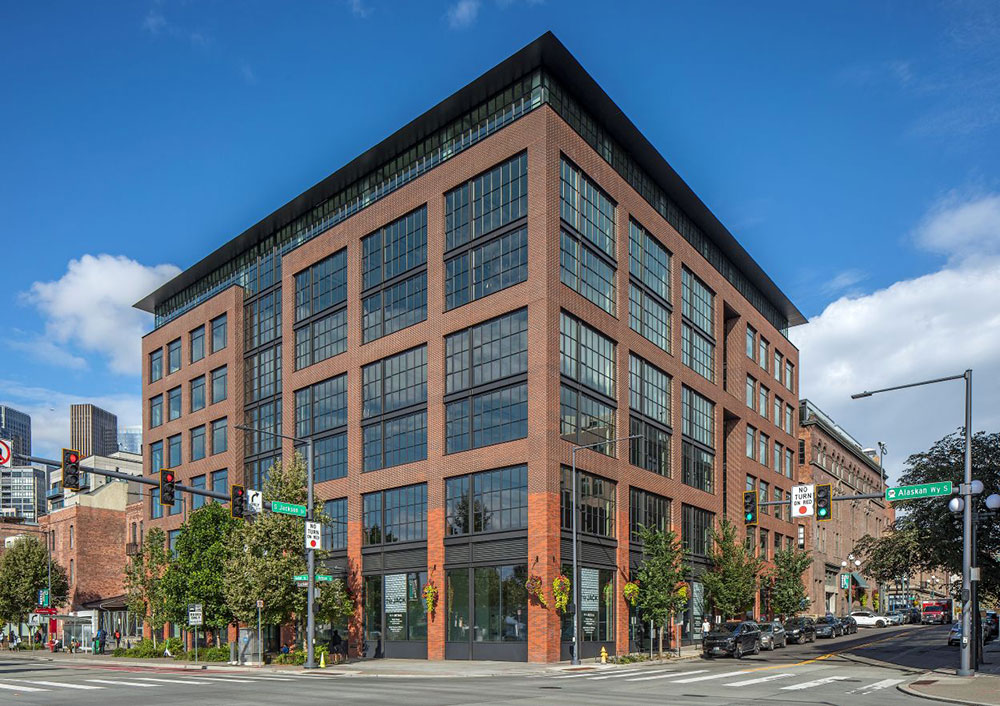
“On the waterfront side, the brick façade is extruded into two distinct sections with different window styles,” stated Tom Kundig, FAIA, RIBA, owner and principal of the Seattle-based Olson Kundig. “This helps the building to read as separate masses while further blending into its context. Between the two masses, recessed glazing marks the entrances while steel windows reference the area’s historic industrial buildings.”
In searching for the perfect combination of building materials and styles to create a striking façade while honoring the district’s storied past, the design team tested countless samples and building mockups, and constructed full-scale, two-story brick façades.
“That hands-on process led us to an unexpected strategy: flipping a tumbled brick and using its backside as the building’s exterior face,” related Kundig.
Seeking crystal clear views of Elliot Bay, maximizing daylight throughout the building’s deep floorplate and transporting the natural tones of the sky and water to the interior, the architects wanted a neutral glazing color. Based on a strong recommendation from the team’s façade consultant Front, Solarban® 72 Acuity® glass by Vitro Architectural Glass was selected.
The triple-silver-coated low-e glass delivers the required neutral appearance with visible light transmittance (VLT) of 67% and a solar heat gain coefficient (SHGC) of 0.28.
To strike the right blend of modernism and historical preservation, the architects thoughtfully designed four different window types.
The first, large warehouse-style windows with divided lites span across the floors, marking the entrances and breaking up the building’s scale into brick pavilions. On the seventh floor, the windows form a glazed crown which works to visually lower the building’s height.
“On the north side, sloped glazing from the second floor to the penthouse brings in light, opens up waterfront views, and creates a lantern-like glow at night,” said Kundig.
The second window type is squared punched openings with mullion patterns. The architects placed these openings by the corner pavilion to give the façade a clear, human scale.
On the street level, large-paned curtain wall units create a transparent base and help activate the retail spaces.
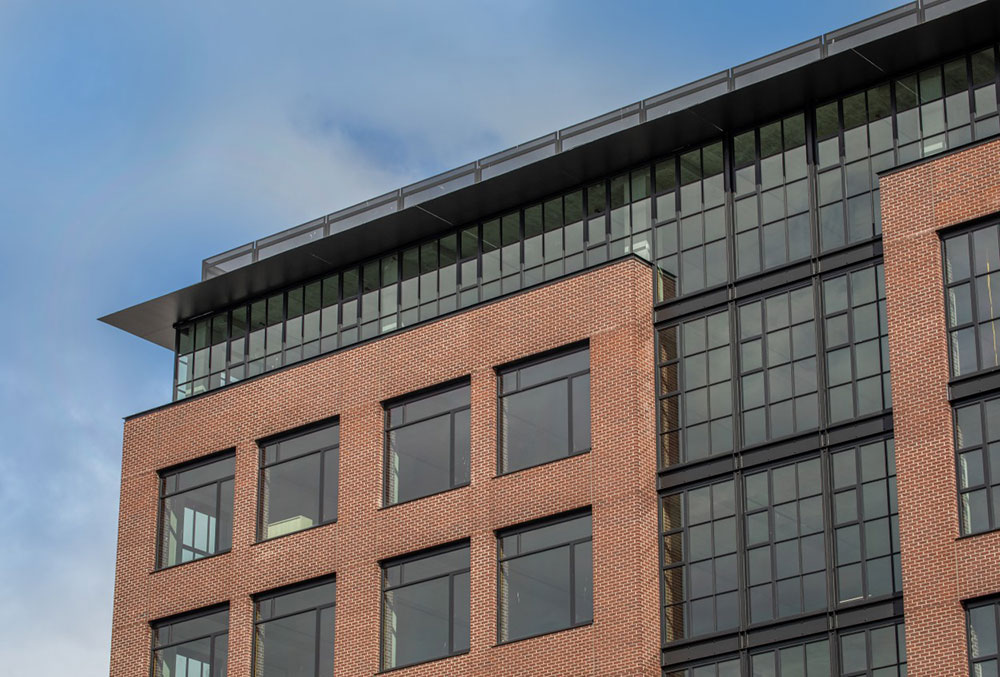
The fourth fenestration strategy is oversized simulated double-hung windows that mimic the alley facades of historic Pioneer Square.
The colors and textures of the brick façade were also designed to pay homage to the neighborhood.
“The Washington Trust for Historic Preservation recognized The Jack as a successful integration of new architecture into a historic district and acknowledged our effort to keep the neighborhood’s character intact,” related Kundig.
The designers aligned the window modules with the brick coursing so the full bricks could connect with the window units. Because the windows are recessed, the bricks were designed to return at the jambs to create deeper shadow lines.
Targeting LEED® Gold certification, the building features a 16,000 square-foot green roof arranged into multiple glass pavilions surrounding a central green roof.
Project Credits:
- Architect: Olson Kundig
- Glass Fabricators: Oldcastle BuildingEnvelope and Vitrum Glass Group
- Glazing Contractor: Wausau Window and Wall Systems
- General Contractor: JTM Construction
- Photographer: Tom Kessler
Solarban® and Acuity® are registered trademarks of Vitro.
Cradle to Cradle Certified® is a registered trademark of the Cradle to Cradle Products Innovation Institute.
LEED® — an acronym for Leadership in Energy and Environmental Design™ — is a registered trademark of the U.S. Green Building Council®.
About Vitro Architectural Glass
Vitro Architectural Glass is the largest glass producer in the Western Hemisphere, manufacturing a range of industry-leading products serving the construction, solar, transportation, defense and security markets worldwide. Committed to continually raising the industry standard for sustainability, Vitro was the first U.S. glass manufacturer to have its complete collection of architectural glass products earn Cradle to Cradle Certified® status and the first North American manufacturer to publish third-party verified Environmental Product Declarations (EPDs) for flat glass and processed glass products. Additionally, as of April 2024, all Vitro architectural glass products meet the Top 20% Low Embodied Carbon (LEC) material Global Warming Potential (GWP) threshold the U.S. General Services Administration (GSA) established pursuant to the Inflation Reduction Act of 2022 and related guidance from the U.S. Environmental Protection Agency. Vitro operates seven glass production facilities across North America, four residential glass fabrication plants in Canada and one of the world’s largest glass research and development facilities in Pittsburgh, Pennsylvania. For more information, please visit VitroGlazings.com.

Media Contact:
Robert J. Struble
Vitro Architectural Glass
412-820-8138
rstruble@vitro.com
vitroglazings.com
