
High-Clarity Solarban® 72 Starphire® Glass Helps Transform Pittsburgh International Airport Terminal
Photography: Ema Peter
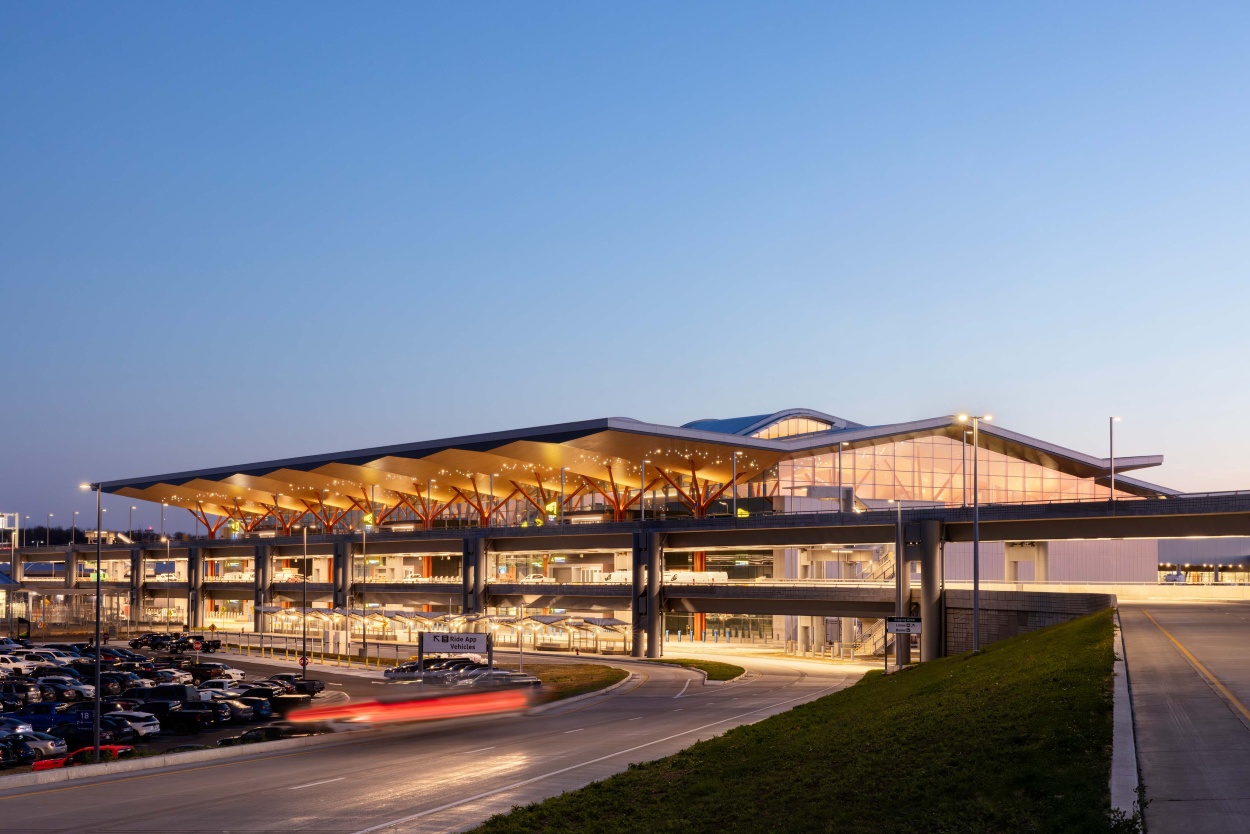
PITTSBURGH, July 29, 2026 – Featuring an undulating mass timber roof, steel beams mimicking tree trunks and branches, and expansive clerestory windows, Pittsburgh International Airport’s new 811,000-square-foot terminal, which officially opened in November 2025, presents a new gateway to the city.
Designed by Gensler, outdoor terraces incorporate native plants, walkways and benches, and the wavy wood ceiling references the rolling hills of the Allegheny Mountains.
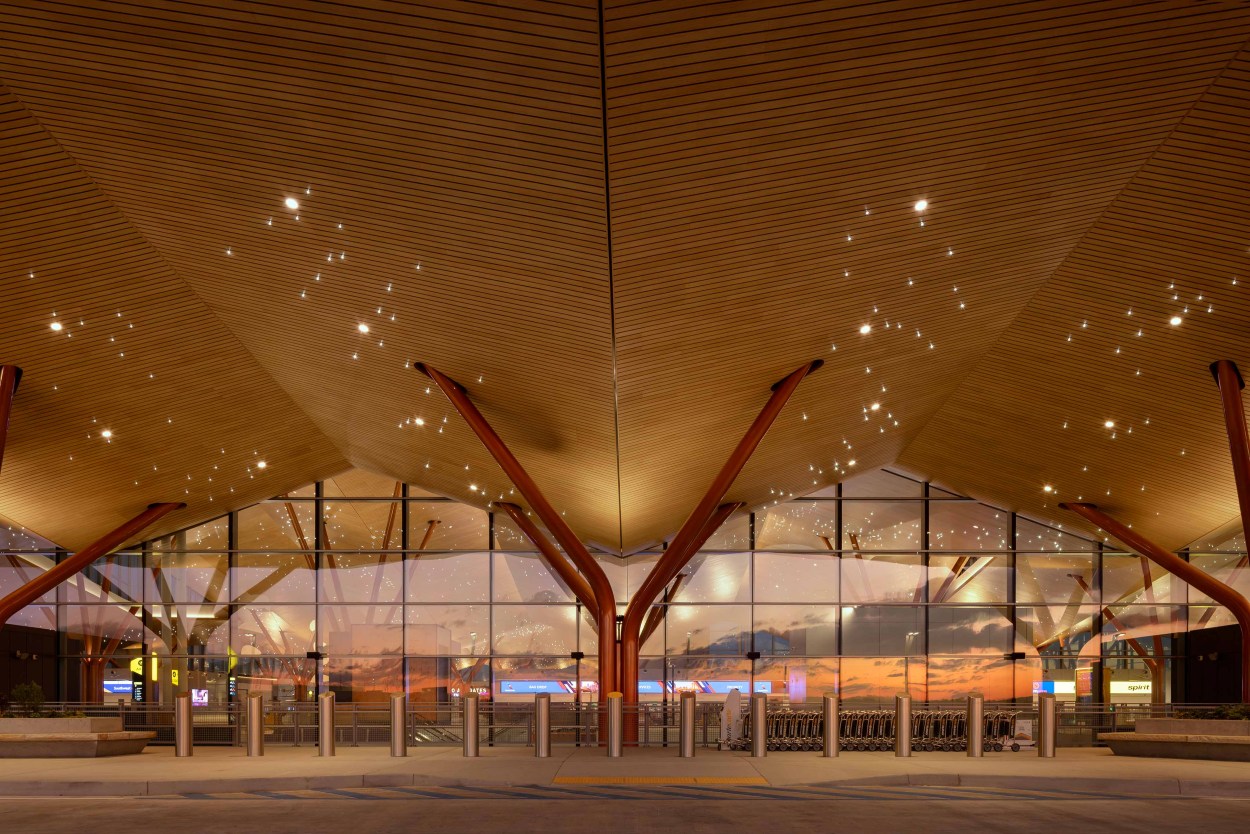
“The undulating roof design is intended to evoke impressions of being under a tree canopy. The shifting light from the clerestories is like dappled sunlight that filters down through the leaves,” said Carolyn Sponza, project director, Gensler, Pittsburgh.
A total of 38 unique, architecturally exposed structural steel (AESS) hollow beams filled with concrete cast a copper hue, creating the look of sunlight filtering through the canopy.
For the clerestory windows, which weave above and below the dropped timber ceiling, the design team wanted clear glass but also required solar control.
Initially, a glass product offering Visible Light Transmittance (VLT) of 70% was considered. However, the Solar Heat Gain Coefficient (SHGC) was just 0.38, which meant that more than a third of the solar heat would be allowed into the terminal.
“Our overall strategy was to find a glass that could be as close to clear as possible but would provide balance with our mechanical system so as not to add load thereby increasing unit size and operational costs,” explained Sponza.
The design team prioritized a highly transparent glazing solution that would maximize clarity and daylight while working in harmony with the building’s mechanical systems. By balancing aesthetic and performance goals, the selected glass helped minimize energy demands, avoid increased HVAC loads and support long-term operational efficiency.
Ultimately, Solarban® 72 Starphire® glass from Vitro Architectural Glass was specified, which delivers a VLT of 68% and SHGC of 0.28.
To verify these values and compliance with ASHRAE Energy Sim Standard, the Buro Happold engineering team used Integrated Environmental Solutions’ modeling software.
“This helped us validate the performance of the glass within the overall strategy,” added Sponza.
In addition to performance and aesthetics, the daylight from the glazing and clerestory windows helps direct passengers from the curb to the security checkpoint within the terminal. A stark change from the windowless original terminal, the new design enhances flow, decreases wait times, speeds up the security and check-in, presents a welcoming civic space and celebrates Pittsburgh’s evolving identity from the Steel City to a major hub of higher education, integrated tech and medicine.
Photography: Ema Peter
The glazing strategy also plays a critical role in enhancing passenger comfort and environmental quality throughout the terminal. By maximizing diffused daylight while minimizing glare, the clerestory system reduces reliance on artificial lighting during daytime hours, contributing to overall energy efficiency.
Solarban® 72 Starphire® glass helps maintain consistent interior temperatures, mitigating hotspots and improving thermal comfort in large, open spaces. Additionally, the clarity of the low-iron glass preserves true color rendering, allowing architectural materials to be experienced as intended by the design team.
Complementing the high-performance Solarban® 72 Starphire® glass, the terminal incorporates rainwater harvesting, local-sourced materials and an on-site microgrid, making the airport electrically self-sufficient.
As Pittsburgh International Airport is seeking LEED® Gold certification for the new terminal, Solarban® 72 Starphire® glass contributes to both operational and material sustainability goals through its low embodied carbon profile, energy-efficient performance, third-party verified Environmental Product Declarations (EPDs) and Cradle to Cradle Certified® status. Despite the challenges associated with certifying a 24/7 airport facility, the project demonstrates how high-performance glazing can support ambitious sustainability objectives while enhancing the passenger experience.
Project Credits:
- Owner/Developer: Allegheny County Airport Authority
- Architect: Gensler
- Glass Fabricators: Vitro Certified® Fabricators, Press Glass and United Plate Glass Co. (Interior Starphire® Glass)
- Glazing Contractor: D-M Products
- General Contractor: PJ Dick
- Photography: Ema Peter
Solarban®, Starphire® and Vitro Certified® are registered trademarks of Vitro.
Cradle to Cradle Certified® is a registered trademark of the Cradle to Cradle Products Innovation Institute.
LEED® is a registered trademark of the U.S. Green Building Council®.
About Vitro Architectural Glass
Vitro Architectural Glass is the largest glass producer in the Western Hemisphere, manufacturing a range of industry-leading products serving the construction, solar, transportation, defense and security markets worldwide. Committed to continually raising the industry standard for sustainability, Vitro was the first U.S. glass manufacturer to have its complete collection of architectural glass products earn Cradle to Cradle Certified® status and the first North American manufacturer to publish third-party verified Environmental Product Declarations (EPDs) for flat glass and processed glass products. Additionally, as of April 2024, all Vitro architectural glass products meet the Top 20% Low Embodied Carbon (LEC) material Global Warming Potential (GWP) threshold the U.S. General Services Administration (GSA) established pursuant to the Inflation Reduction Act of 2022 and related guidance from the U.S. Environmental Protection Agency. Vitro operates seven glass production facilities across North America, four residential glass fabrication plants in Canada and one of the world’s largest glass research and development facilities in Pittsburgh, Pennsylvania. For more information, please visit VitroGlazings.com.

Media Contact:
Robert J. Struble
Vitro Architectural Glass
412-820-8138
rstruble@vitro.com
vitroglazings.com
